RECENT
- Cell wall–membrane anchors keep plant cells resilient during drought
- How root cell types diverge across the Brassicaceae
- Corn varieties differ widely in how their roots seek water
- José named a Howard Hughes Medical Institute Investigator
- Mapping osmotic stress pathways across the green lineage
-
Sebastian and Yee et al. highlighted by BBC
Ever wonder how plant roots respond to drought? You probably thought it would be super complex. Turns out a simple change in the development of shoot-borne roots explains much of the architectural differences. In a new paper from the lab published in PNAS we described how grass species suppress crown root growth to slow the extraction of water from soil and preserve this precious resource for a longer time. We think this may allow grass plants to better survive drought. Interestingly, maize and millet still make some crown roots under drought and this may make these domesticated plants more water hungry. Check out the highlight of this work in the BBC!
-
Crop roots enact austerity measures during drought to bank water
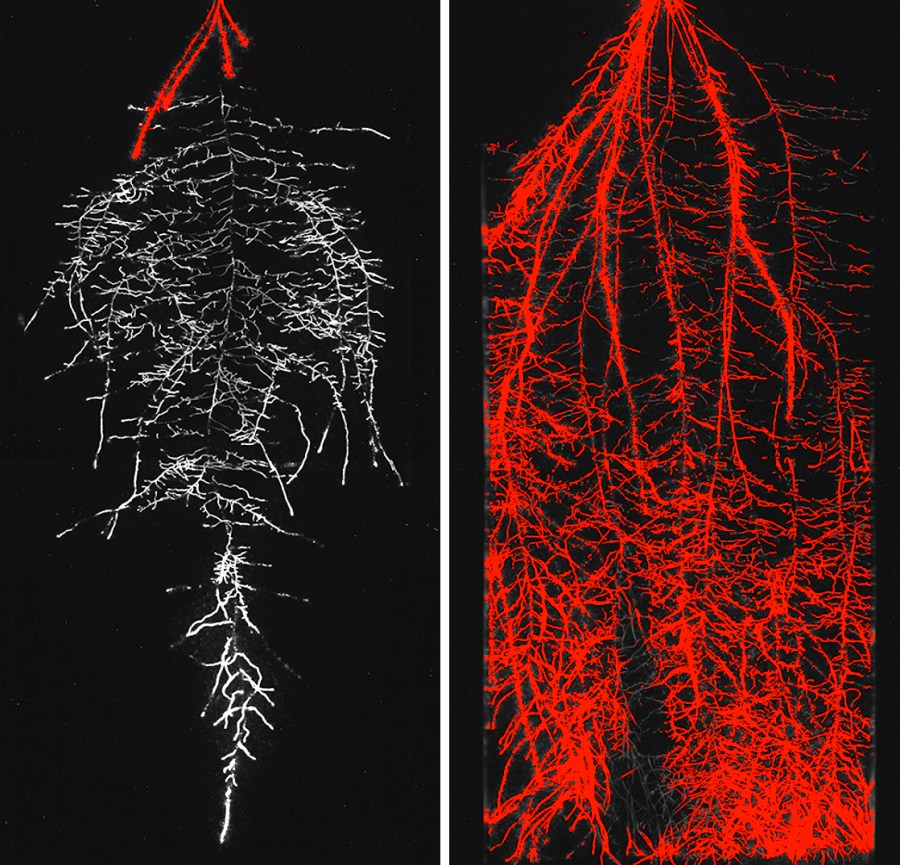
Crown roots emerging from the base of the shoot in a grass seedling. Grasses build most of their root system from crown roots that emerge at the base of the shoot. Jose Sebastian and colleagues showed that when the surface soil dries, these roots stop developing, which limits water uptake and leaves reserves in the soil for later — a kind of austerity measure. The suppression is reversible: crown roots resume growth when moisture returns. Comparing wild grasses with domesticated maize showed the response is weaker in crops, suggesting breeding has eroded a drought-coping behavior that could be recovered.
Coverage: Carnegie Science | BBC News
Sebastian J, Yee MC, Viana WG, Rellán-Álvarez R, Feldman M, Priest H, Trontin C, Lee T, Jiang H, Baxter I, Mockler TC, Hochholdinger F, Brutnell TP, Dinneny JR (2016) Grasses suppress shoot-borne roots to conserve water during drought. Proc Natl Acad Sci USA 113(31):8861-8866. doi: 10.1073/pnas.1604021113
-
2016 JGI User Meeting Presentation
See my recent presentation at the JGI User’s meeting in Walnut Creek, CA. Really exciting and varied research presented at the meeting. Happy to be part of it!
-
Therese LaRue wins NSF graduate fellowship!
Congratulations to Therese for being awarded a prestigious National Science Foundation Graduate Research Fellowship! Therese is currently working to establish a salt-stress regime for use in GLO-Roots, developing GWAS resources and characterizing the role of transcriptional networks in the endodermis controlling tissue differentiation under salt stress.
-
Science publishes letter on GMO petition
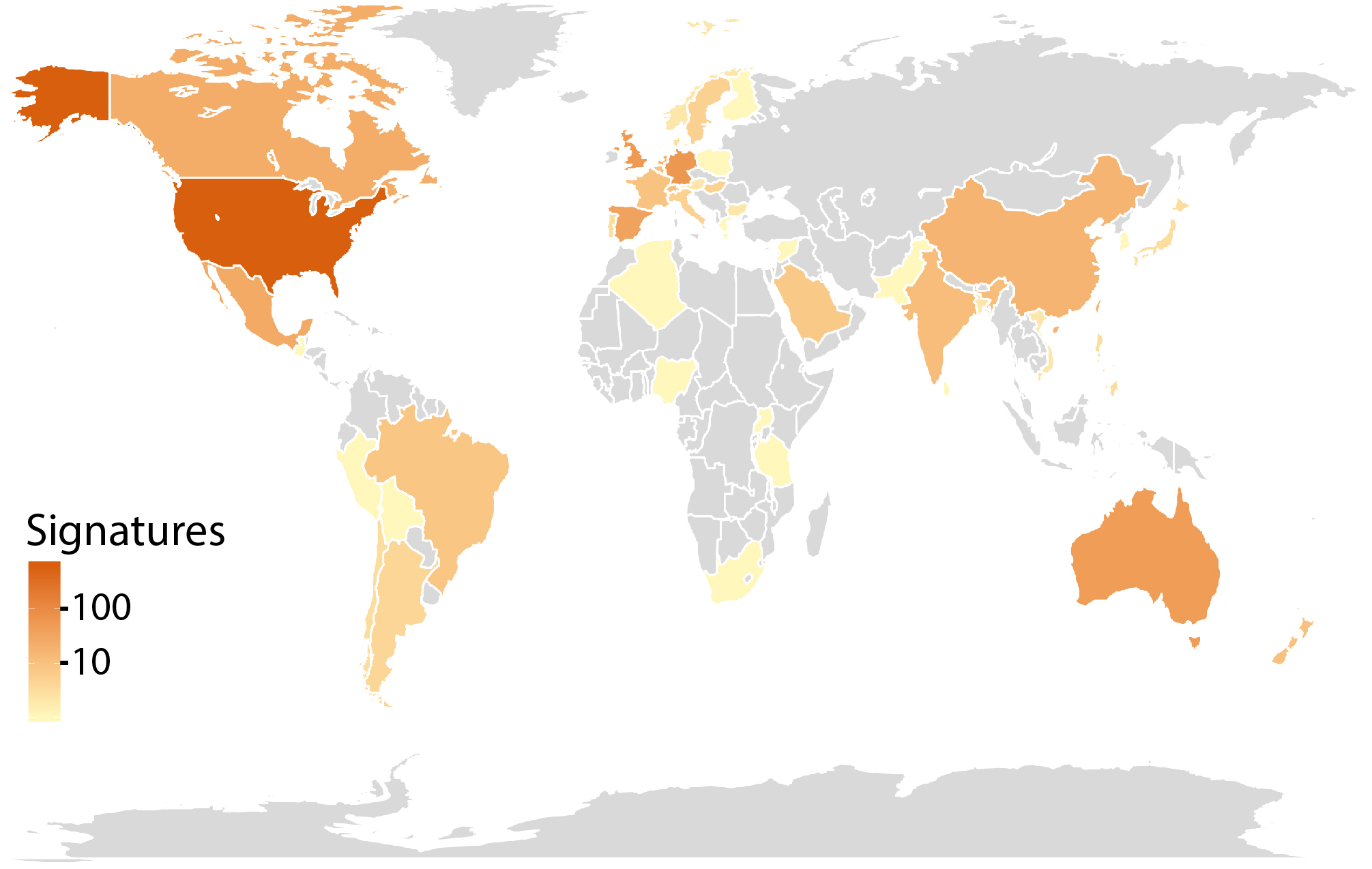
Our petition promoting a scientific approach to the use and evaluation of Genetic Modification technology for crop improvement was just published in Science! Read the letter here. The original full article and data analysis can be found at Github here.
-
Plant scientists: GM technology is safe
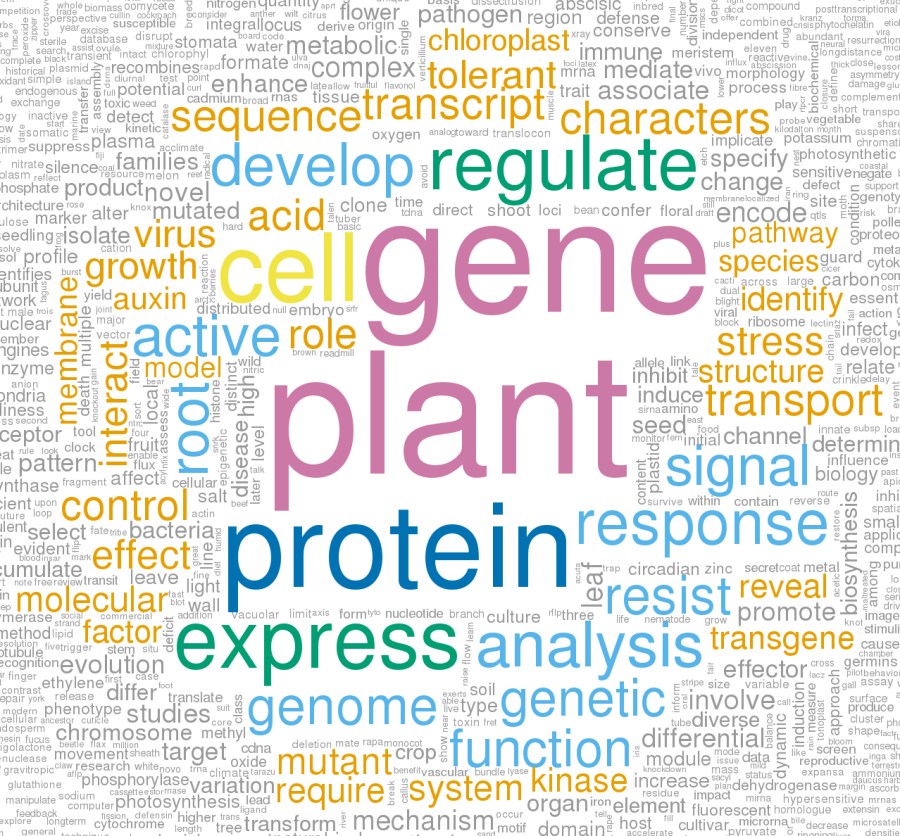
Word cloud from the signatories’ statement on genetic modification. Writing in Science, José and colleagues argued that the evidence on genetically modified crops is clear enough to act on: the technology is a safe and useful tool among the several that will be needed to meet food supply demands, and public debate should reflect that scientific consensus rather than contradict it. The letter was signed by a large number of plant scientists.
Coverage: Carnegie Science
Fahlgren N, Bart R, Herrera-Estrella L, Rellán-Álvarez R, Chitwood DH, Dinneny JR (2016) Plant scientists: GM technology is safe. Science 351(6275):824. doi: 10.1126/science.351.6275.824-a
-
José joins NAASC
José has recently been elected to NAASC, the North American Arabidopsis Steering committee, along with Elizabeth Haswell from Washington University of St. Louis. Being part of NAASC provides an opportunity to organize events that promote Arabidopsis research and plant biology in general. NAASC organizes the ICAR meetings. The first duty in 2015 was to vote for St. Louis as the host city for the 2017 ICAR meeting! Meet you in St. Louis!
-
GLO-Roots goes robotic!
Heike Lindner and Therese LaRue are starting to test a newly installed automated rhizotron-handling system for GLO-Roots. The yet-to-be-named system was designed in collaboration with Modular Science, a Bay Area startup specializing in building robotic systems for biological research. The system will enable automated delivery of plants to the GLO1 imaging system as well as automated determination of weight and addition of water, luciferin, saline solution, etc. At max capacity, we will be able to image about 130 rhizotrons per day, which will enable us to conduct larger-scale experiments to understand the role of natural genetic variation in root system architecture and environmental responses. Check out our teaser video of the system.
-
Make your voice heard on GMOs!
Working with Dan Chitwood, Becky Bart and Rubén Réllan-Álvarez, we have organized a petition to gauge the support of GM technology for crop improvement by scientists and those that support a scientific approach in the development and evaluation of agricultural products. The petition is in support of the ASPB position statement on GMOs. We’ve reached over 1,400 signatories. Join the movement and leave a statement why you think it’s important to support GM technology!
-
Quite Branches Blog highlights Sachs and GLO-Roots
Julius von Sachs is the father of modern plant physiology. Blog by Ian Street highlights importance of Sachs and describes the intellectual connectivity between the work of our lab with this scientific tradition. Sachs use of rhizotrons and the advances made through GLO-Roots are fueled by our understanding that plant biology makes sense only in an environmental context.
 Dinneny lab