Crop roots enact austerity measures during drought to bank water

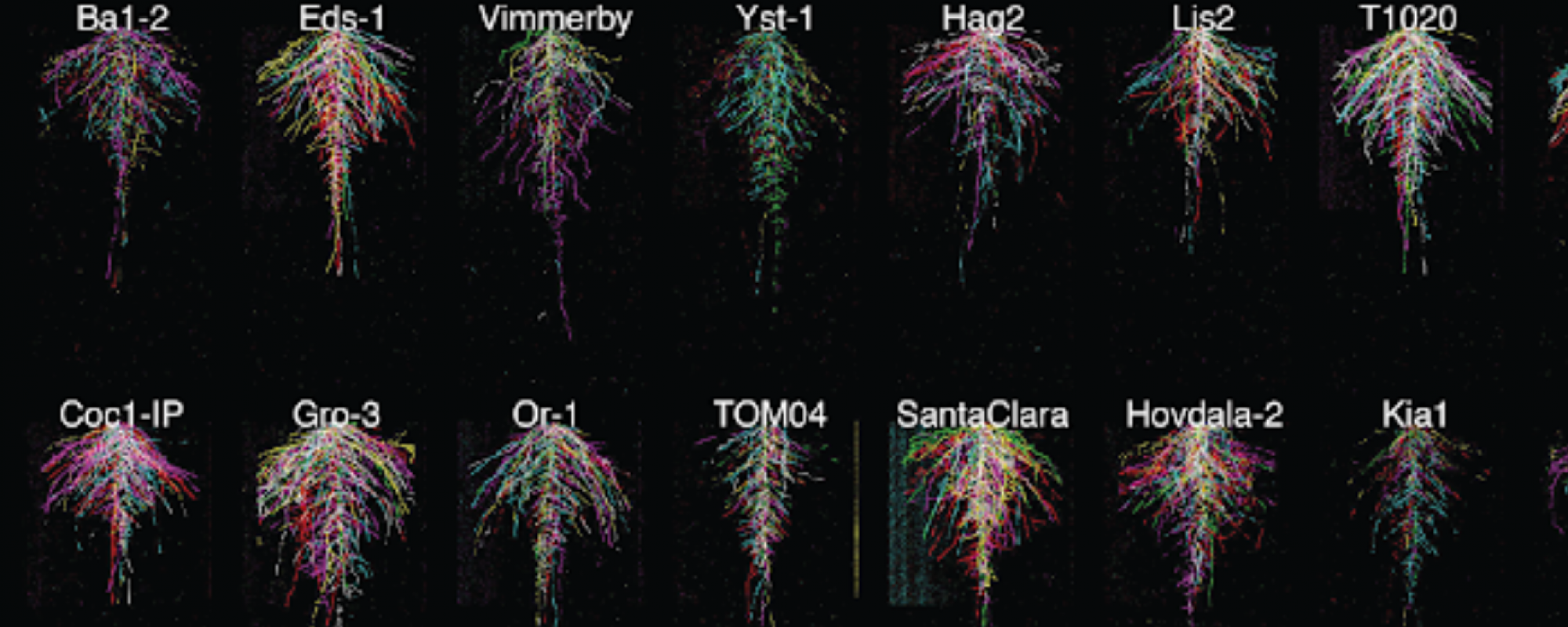
Crown roots emerging from the base of the shoot in a grass seedling.

Grasses build most of their root system from crown roots that emerge at the base of the shoot. Jose Sebastian and colleagues showed that when the surface soil dries, these roots stop developing, which limits water uptake and leaves reserves in the soil for later — a kind of austerity measure. The suppression is reversible: crown roots resume growth when moisture returns. Comparing wild grasses with domesticated maize showed the response is weaker in crops, suggesting breeding has eroded a drought-coping behavior that could be recovered.

Coverage: Carnegie Science | BBC News

Sebastian J, Yee MC, Viana WG, Rellán-Álvarez R, Feldman M, Priest H, Trontin C, Lee T, Jiang H, Baxter I, Mockler TC, Hochholdinger F, Brutnell TP, Dinneny JR (2016) Grasses suppress shoot-borne roots to conserve water during drought. Proc Natl Acad Sci USA 113(31):8861-8866. doi: 10.1073/pnas.1604021113
Plant scientists: GM technology is safe

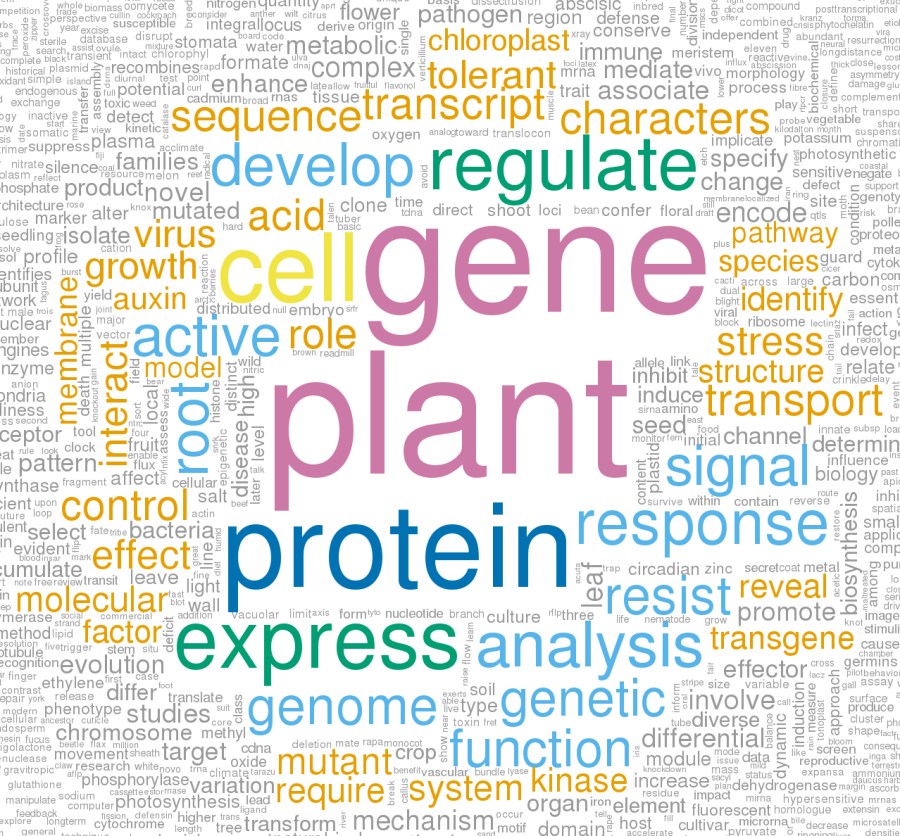
Word cloud from the signatories’ statement on genetic modification.

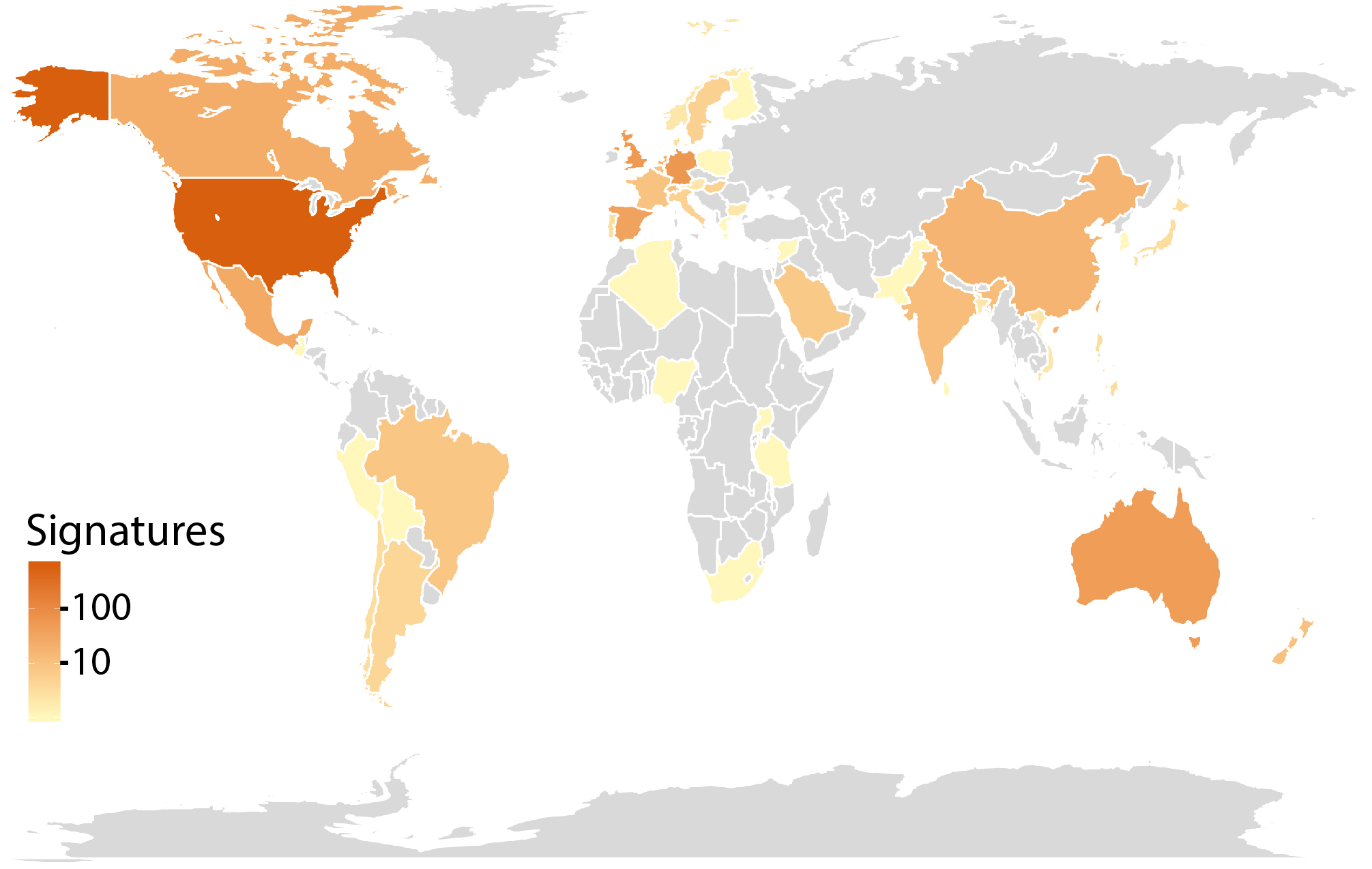
Writing in Science, José and colleagues argued that the evidence on genetically modified crops is clear enough to act on: the technology is a safe and useful tool among the several that will be needed to meet food supply demands, and public debate should reflect that scientific consensus rather than contradict it. The letter was signed by a large number of plant scientists.

Coverage: Carnegie Science

Fahlgren N, Bart R, Herrera-Estrella L, Rellán-Álvarez R, Chitwood DH, Dinneny JR (2016) Plant scientists: GM technology is safe. Science 351(6275):824. doi: 10.1126/science.351.6275.824-a

GLO-Roots: a firefly protein makes roots visible in soil

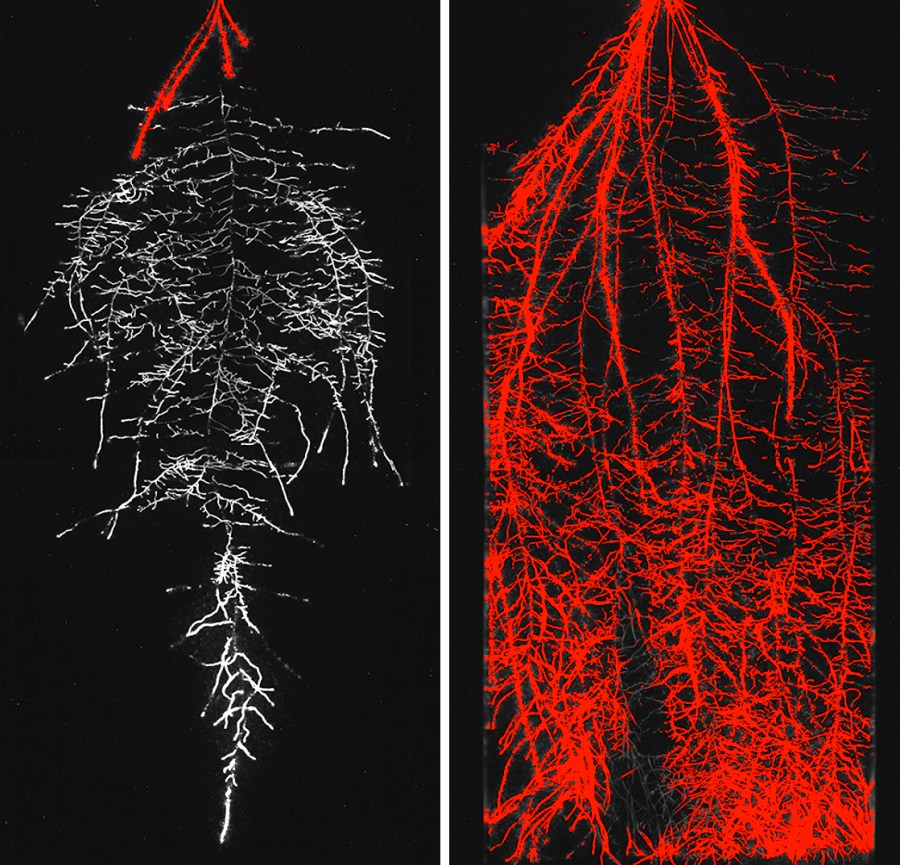
Most of what is known about root development comes from plants grown on transparent agar, a poor substitute for soil. Rubén Rellán-Álvarez and colleagues developed GLO-Roots, which expresses luciferase in the root and images the resulting light through soil in flat rhizotrons. The system captures whole, intact root systems over weeks, and separate luciferases allow root architecture, gene expression and interactions between neighboring plants to be followed at the same time. It brings quantitative imaging to root systems growing in a realistic environment.

Coverage: Carnegie Science | Nature Methods

Rellán-Álvarez R, Lobet G, Lindner H, Pradier P-L, Sebastian J, Yee MC, Geng Y, Trontin C, LaRue T, Schrager A, Haney C, Nieu R, Maloof J, Vogel JP, Dinneny JR (2015) GLO-Roots: an imaging platform enabling multidimensional characterization of soil-grown root systems. eLife 4:e07597. doi: 10.7554/eLife.07597

The Divining Root

New review by Neil Robbins II is out online at Journal of Experimental Botany!  Review covers the response of roots to moisture at the micro and macro scales and discusses research related to osmo-sensing and hydropatterning in roots.  Neil did a great job communicating concepts in physiology with clarity.  Enjoy!

Robbins NE 2nd, Dinneny JR. The divining root: moisture-driven responses of roots at the micro- and macro-scale. J Exp Bot. 2015 Jan 22. pii: eru496. [Epub ahead of print] Review. PubMed PMID: 25617469.

Hydropatterning: water provides the blueprint for root architecture

Roots do not branch at random. Yu Bao and colleagues showed that a root in contact with moisture on one side places its lateral branches on that side and suppresses them on the dry side, a behavior the lab named hydropatterning. The response is set locally, through auxin biosynthesis and transport, and operates independently of the general stress signaling triggered by water deficit. It occurs in soil as well as in the laboratory, and in grasses as well as Arabidopsis, indicating a broadly conserved mechanism for placing roots where water is.

Coverage: Carnegie Science

Bao Y, Aggarwal P, Robbins NE II, Sturrock CJ, Thompson MC, Tan HQ, Tham C, Rodriguez PL, Vernoux T, Mooney SJ, Bennett MJ, Dinneny JR (2014) Plant roots employ a patterning mechanism to position lateral root branches toward available water. Proc Natl Acad Sci USA 111(25):9319-9324. doi: 10.1073/pnas.1400966111

How salt stops root growth: ABA signaling in the endodermis

Salt in the soil arrests the growth of lateral roots, but which cells make that decision was unclear. Lina Duan and colleagues found that the stress hormone abscisic acid acts through a single internal cell layer, the endodermis, to hold newly formed lateral roots in a quiescent state. Blocking ABA signaling in the endodermis alone was enough to release that arrest, showing that one cell type can govern the growth of an entire organ. The quiescent state is reversible, allowing roots to resume growth when conditions improve.

Coverage: Carnegie Science

Duan L, Dietrich D, Ng CH, Chan PMY, Bhalerao R, Bennett MJ, Dinneny JR (2013) Endodermal ABA signaling promotes lateral root quiescence during salt stress in Arabidopsis seedlings. Plant Cell 25(1):324-341. doi: 10.1105/tpc.112.107227